
SORRAYLA Buying Guide: Pricing, Suppliers, and Fit
This guide explains how to evaluate SORRAYLA options with a focus on practical price signals, supplier credibility, and product fit. Objectively, SORRAYLA functions as a brand/search term used by buyers to compare offerings across supply chains. The article frames how to verify claims, understand cost drivers, and make decisions using documented requirements.
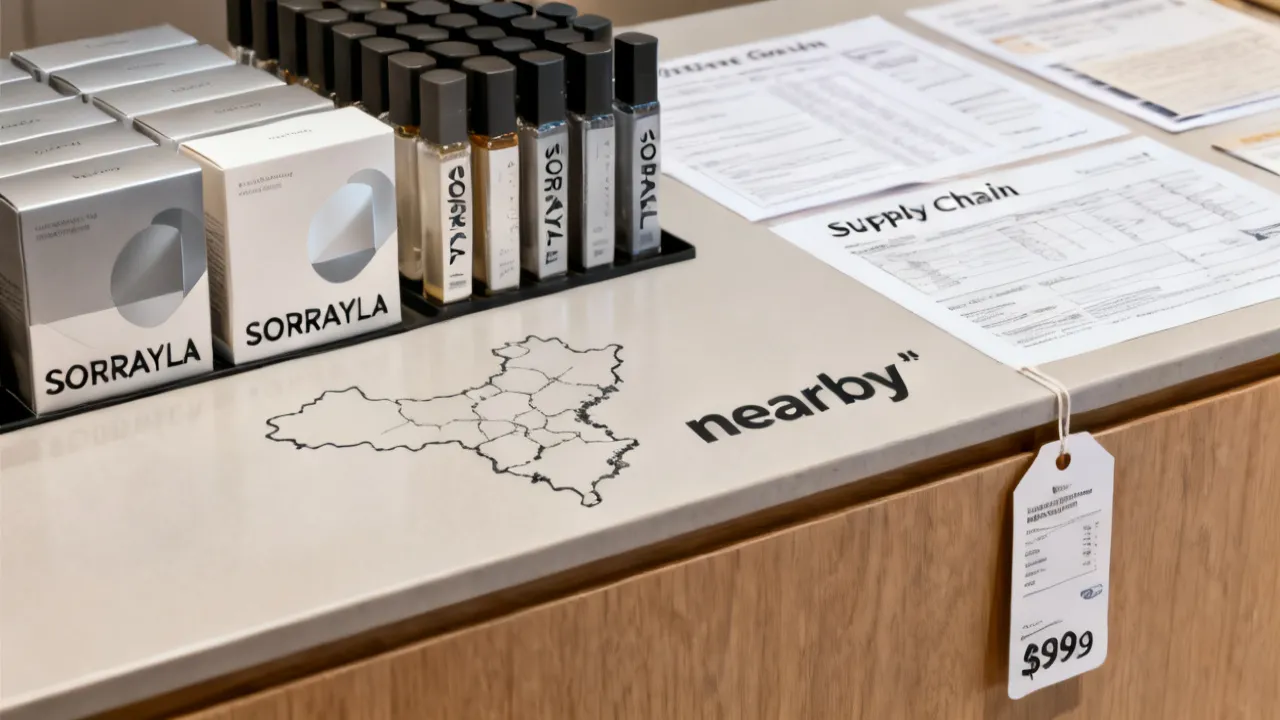
At a glance: how to choose the right SORRAYLA option
When shoppers search for SORRAYLA, the practical question is usually the same: which version matches their needs, and what does the price genuinely reflect? This guide is structured to help you compare SORRAYLA offerings using supplier reliability, packaging and documentation checks, and clear requirements—so your decision is grounded in observable criteria rather than assumptions.
Because specific listings, exact price points, and named suppliers were not provided in your prompt, the article focuses on how to interpret price and supplier details you may encounter, what to verify, and what “good fit” means across typical commercial buying flows.
In other words, if you treat every listing as a distinct “bundle” with its own facts—what’s inside the box, how it’s shipped, what warranty applies, and how returns are handled—you’ll be able to choose more confidently even when you cannot directly test the product beforehand.
Understanding SORRAYLA as a buyer search term
SORRAYLA is presented in this guide as a brand-oriented term that buyers use to locate products and sellers. In commerce, brand terms typically sit on top of a supply ecosystem—manufacturing, logistics, warehousing, and retail/online fulfillment. That ecosystem influences how price is formed and why two listings with similar marketing language can differ in real-world deliverables (specifications, contents, warranty handling, or return conditions).
From an industry-expert perspective, the very important early step is not to “pick the low price listing,” but to clarify what you’re comparing. For brand-style sourcing, the same brand name can appear across multiple product lines, variants, packaging types, and compliance scopes. Even if the title looks identical, the effective product could differ.
Clarifying the comparison means answering the questions that experienced procurement teams ask automatically:
- Product identity: exact model/variant, included components, size, compatibility, or intended use.
- Fulfillment mode: shipped from stock versus made-to-order, local dispatch versus cross-border transit.
- Supplier posture: direct distributor, authorized reseller, marketplace seller, or aggregator.
- Commercial terms: warranty, replacement process, lead time, and packaging integrity.
- Documentation level: whether the listing provides clear paperwork such as manuals, batch/lot references (where applicable), invoices, and proof of purchase requirements.
When those questions are answered, you can compare “like with like” rather than comparing a vague promise versus a defined deliverable.
Why price for SORRAYLA listings changes (and how to read it)
Buyers often treat price information as a single number, but in practice it’s a composite of measurable factors. A sophisticated comparison considers the cost drivers behind the final total. Two listings with the same brand name and similar photos can still represent different economics because sellers incur different costs to get the product to you and to support it after delivery.
A clear mental model is to treat the displayed price as: product value + service value + risk pricing + channel overhead. Even if you cannot see each component directly, you can infer it by checking the listing’s claims and policies.
- Source channel: direct distribution usually creates different overheads than marketplace fulfillment. Direct distributors may price differently because they handle logistics, warranty flow, and inventory planning in a more standardized way.
- Inventory velocity: stock clearance and seasonal cycles can change pricing without changing the product quality. A discount might reflect a seller trying to move inventory rather than a change in manufacturing or capabilities.
- Shipping and handling: carriers, protection standards, and delivery windows can shift total cost. Two “same item” listings might differ in how robustly they package and insure shipment.
- Documentation and compliance: when sellers provide formal invoices, batch info, or controlled handling, the administrative cost may be reflected in price. Some sellers include paperwork that simplifies warranty claims; others may omit it.
- Packaging grade: higher-protection packing and tamper evidence can affect unit economics. If one listing is clearly “premium packed,” it can cost more but reduce the chance of transit damage.
- After-sales service effort: warranty replacements, customer support staff time, and return processing can contribute to pricing. A seller with a strong returns process may charge more, but you gain operational certainty.
To keep your evaluation objective, compare like-for-like. If one SORRAYLA listing includes additional components or stronger warranty handling, you should treat it as a different bundle—not merely a different price.
Another practical tip is to normalize your comparison by calculating total landed cost (unit price + shipping + taxes/fees that are clearly stated + any required accessories or consumables to use the product as intended). If the seller lists shipping that is “free” but imposes a higher unit price, the “total landed cost” can still be higher—or vice versa.
Supplier credibility: what “good supplier details” look like
When your prompt mentions supplier details, the key is to identify which characteristics suggest a seller can support the product lifecycle: pre-sale clarity, dependable fulfillment, and after-sale resolution.
Supplier credibility is not only about whether the seller replies quickly—it’s about whether the seller’s information is consistent, verifiable, and operationally aligned with the claims they make.
Consider these supplier indicators when reviewing SORRAYLA listings “nearby” or through wider channels:
- Verifiable business identity: consistent company name, stable business registration information, and coherent customer service structure. Look for details that match across the listing, packaging/receipt, and customer support channels.
- Transparent product documentation: batch/lot references where applicable, clear manuals, and stated compatibility criteria. Documentation should not be vague; it should allow you to confirm you’re buying the correct variant.
- Return and warranty mechanics: written procedures for replacements, timelines, and what constitutes valid claims. A credible seller explains how to initiate returns and what evidence is needed.
- Fulfillment reliability: realistic lead times and tracking/dispatch confirmations. “Ships in 1–2 days” should align with how quickly tracking appears and with any historical patterns you can observe (e.g., delays mentioned by buyers).
- Customer support responsiveness: the ability to answer technical questions with specificity. If you ask about what’s included, warranty coverage, or variant differences, a credible seller can respond with concrete information rather than generic statements.
- Consistency across channels: if the seller’s policies differ between the listing and checkout pages, or if warranty terms change mid-process, treat that as a risk signal.
In sectors where authenticity and traceability matter, supplier vetting is not optional—it’s part of procurement discipline. Internationally, consumer protection and fraud-prevention frameworks emphasize that buyers should rely on verifiable terms and documentation rather than unverified assurances.
It helps to think in terms of evidence strength. A listing that says “best quality” is weak evidence. A listing that provides model identifiers, a clear warranty policy, and a documented replacement process is stronger evidence.
Product fit checklist for SORRAYLA
“Fit” is often oversimplified, but for very purchases it breaks into three layers: spec fit, usage fit, and service fit.
A common buyer mistake is to treat fit as a single question: “Does it look right?” But real purchasing outcomes depend on whether the product works in your environment and whether you can successfully resolve problems. Fit is therefore both technical and operational.
1) Spec fit
Ensure the exact variant matches your requirement. With SORRAYLA, confirm:
- model/variant identifiers
- dimensions, capacities, material composition, or functional specs (as applicable)
- compatibility with your existing setup (if relevant)
- any included accessories or components
- whether the listing specifies “what you receive” clearly (for example, whether the product is standalone or requires additional parts to function)
Spec fit is usually the easiest to validate because it relies on listing details. However, sellers sometimes use inconsistent naming. If you have any doubts, ask the seller for the exact variant code or for documentation that confirms the model.
When documentation is available, compare the listing description to what the manual or spec sheet states. If the listing says “compatible with X,” but the manual does not mention X, you have a discrepancy that should be resolved before purchase.
2) Usage fit
Clarify how the product is expected to perform in your context. If you’re sourcing “nearby,” local availability may influence freshness, lead times, and handling practices. Consider:
- intended environment or use case
- operating conditions and maintenance expectations
- user skill requirements and installation complexity
- expected runtime or workload (if the product’s performance depends on usage patterns)
Usage fit is where you translate product specifications into real outcomes. Two people can buy “the same” SORRAYLA listing, but their usage environments can be different. Temperature, exposure, and handling conditions (for example, how often the product is moved or stored) can matter significantly.
If you’re unsure, don’t guess. Use the seller’s documentation to match requirements. If documentation does not clarify, ask pointed questions: what conditions are safe, what maintenance is recommended, and what performance expectations apply.
3) Service fit
Finally, compare what happens when something goes wrong. The top match is not always the lowest price; it’s the option with an actionable replacement path. Request or locate:
- warranty length and coverage terms
- replacement/repair process
- shipping responsibilities for returns
- proof requirements (order number, batch reference, photos)
- expected turnaround times for replacements or repairs
- requirements for packaging preservation (for example, do you need to keep the box or seals for a claim?)
Service fit can be the differentiator between a smooth purchase and a stressful experience. A seller might offer a lower price, but if their warranty claim procedure is unclear or their return window is short, your risk increases.
As a buyer, you want a process you can follow. A credible seller makes it easy to initiate a claim and communicates what documentation you need. If the return/warranty policy is vague—no timelines, no evidence list, no clear responsibilities—treat it as uncertainty.
Localization: evaluating “nearby” sourcing like a local buyer
When a product is sourced “nearby,” buyer behavior often shifts toward immediacy and trust-building. In many cities, consumers prefer sellers who can respond quickly, explain differences clearly, and support after-sales service without long logistics delays. If you’re comparing SORRAYLA sellers locally, it can help to ask concrete questions in the same tone you would use with a neighborhood shopkeeper: “What’s the dispatch timeline?” “How do you handle returns?” and “Can you confirm the exact variant and contents before shipment?”
Also, local buyers frequently value packaging condition on arrival. For SORRAYLA, treat sealed, tamper-evident packaging and consistent labeling as part of fit—not just aesthetics. Packaging integrity can be relevant if the product’s condition can be compromised in transit or if seals or evidence of handling matters for warranty claims.
There’s also an operational dimension to “nearby”: when the seller is closer, you may reduce the time window during which damage can occur without you noticing. Faster deliveries can make it easier to document any issue promptly, which is important for returns.
If you’re choosing a “nearby” option, pay attention to:
- how quickly the seller provides tracking information (or local pickup confirmation)
- whether the listing or checkout page indicates a specific dispatch schedule
- how they package fragile or sensitive items (e.g., double boxing, padding, sealed wrap)
- whether they explicitly state what to do if the package arrives damaged
Comparison table: decisions and requirements (no links)
The items below translate typical buyer guidance into a structured decision framework. Use it to compare SORRAYLA options you find in the market.
| Aspect | What to compare | Preferred condition / requirement |
|---|---|---|
| Price signal | Unit price vs total cost (shipping, handling, taxes if stated) | Total cost is comparable across listings; bundle differences are clear |
| Supplier details | Business identity, customer service responsiveness, stated fulfillment | Consistent seller profile, clear dispatch times, and traceable order process |
| Product documentation | Manuals, batch/lot references (where applicable), included components | Listing clearly states what you receive and how it’s documented |
| Warranty / returns | Coverage scope and claim procedure | Written, understandable policy; timelines stated; return steps described |
| Handling integrity | Packaging type, tamper evidence, and protection for transit | Sealed packaging and damage-handling expectations are communicated |
| Fit verification | Compatibility/spec alignment with your use case | You can confirm the exact variant and intended use criteria before purchase |
| Evidence strength | How concrete the listing is: model codes, not generic descriptions | Multiple details align (title, description, documentation, and policy statements) |
Step-by-step buying guide for SORRAYLA (objective workflow)
To keep your purchase decision systematic, use this workflow as a checklist.
- Define your requirement: list the exact variant you need (or the constraints you must satisfy).
- Collect comparable listings: gather at least 3 SORRAYLA options so you can compare bundles, not just prices.
- Normalize the comparison: ensure each listing covers the same components and service terms (warranty, returns, shipping).
- Verify supplier details: confirm business identity, dispatch expectations, and customer support behavior.
- Inspect documentation quality: prioritize sellers who clearly describe what’s included and provide readable policy statements.
- Confirm “fit” questions: ask targeted questions about compatibility, contents, and handling.
- Assess service fit: compare claim steps and required evidence for replacements.
- Review risk controls: check damage/defect procedures, packing integrity expectations, and how quickly you must report issues.
- Finalize with evidence: choose the option that meets requirements with the strongest evidence and the clearest after-sales path.
Conditions and requirements to make the comparison valid
Some comparisons become misleading if basic conditions are not aligned. Use these requirements:
- Same variant requirement: ensure the SORRAYLA listing corresponds to the same model/spec level.
- Same bundle requirement: confirm included items and any required accessories.
- Same service scope: compare the warranty and return policy terms, not the headline headline price.
- Same fulfillment expectations: compare lead time and shipping handling standards.
- Same documentation standard: prioritize sellers who provide consistent, readable information.
- Same claim evidence expectations: confirm what proof is needed (photos, batch info, packaging seals) so you can realistically comply if there’s a problem.
If you cannot align these conditions, treat the listings as different products or different commercial offers—not equivalents.
Industry perspective: procurement discipline in brand-style sourcing
From a procurement and consumer-safety standpoint, brand-oriented shopping—such as searching for SORRAYLA—tends to present a common risk pattern: buyers focus on marketing cues but miss the operational details. Professionals mitigate this by applying “evidence-first” evaluation: documented specifications, traceable supplier behavior, and enforceable commercial terms.
In many industries, this aligns with widely recognized consumer-protection principles: products should be as described; sellers should maintain transparent policies; and buyers should verify claims through accessible documentation. Regulators and standards bodies across regions often emphasize these core ideas, which helps explain why the strongest purchasing decisions are typically those backed by clarity rather than persuasion.
For brand-based search, “clarity” is not just a customer service trait. It is also an operational capability: when a seller can clearly state what you get, how it ships, and how claims work, they reduce uncertainty for both parties. That reduction in uncertainty generally correlates with better outcomes when something goes wrong.
Procurement teams often implement evidence checks such as:
- Specification validation: confirming model codes and included components through official documentation.
- Commercial policy validation: verifying warranty and return conditions are explicitly stated and not contradictory.
- Traceability validation: confirming that order identifiers and batch references (where relevant) can be used to support claims.
- Packaging integrity validation: ensuring shipping methods and packaging standards are described enough to interpret damage-handling instructions.
Even if you are not a procurement professional, applying these same checks in your purchasing workflow can make your outcome more predictable.
Where price fits into the decision (and where it doesn’t)
Price is a factor, but it becomes less meaningful when key variables differ. Consider how price interacts with supplier details and documentation quality:
- If one SORRAYLA option is cheaper but lacks clear variant identification or warranty details, the apparent savings may transfer into risk costs. The risk cost could be financial (paying again) or operational (time spent resolving returns).
- If the more expensive option includes robust returns handling and clear batch documentation (where relevant), it may be “better value” even if it’s not the lowest number. Better value is often about the reliability of resolution, not just the unit price.
- If you’re buying “nearby” and lead time matters, local fulfillment can reduce opportunity cost from waiting—even if shipping charges differ.
- If a low-priced listing requires you to accept unclear terms (for example, “no returns” or unclear warranty coverage), it may be cheaper today but expensive later.
A useful rule of thumb is: if you cannot confidently verify the bundle contents and warranty/return mechanics, treat the cheaper price as provisional. Confirm the missing parts before deciding.
Common buyer mistakes when evaluating SORRAYLA
- Comparing non-identical bundles: forgetting that accessories or components may differ. If one listing includes adapters, installation items, documentation, or additional parts, it is a different bundle.
- Ignoring return mechanics: paying attention to the price but not the time window and proof requirements. Some sellers require photos of packaging seals, or they only accept returns within a narrow period.
- Assuming supplier labels are enough: treating a seller’s statement as proof without checking the clarity of the listing. A confident-sounding description is not the same as a verifiable specification.
- Underestimating fit verification: skipping compatibility questions and later discovering mismatches. Fit verification is easiest before purchase.
- Overlooking documentation gaps: ignoring the fact that some listings provide manuals or documentation while others omit them. Documentation can matter for warranty validity and correct use.
- Not considering packaging integrity: receiving an item that looks fine in photos but arrives damaged. Packaging matters for both product condition and claim eligibility.
Advanced comparison signals: what to look for beyond the basics
Once you’ve reviewed the basics—variant, bundle, price, and warranty—there are additional signals that can further differentiate SORRAYLA options. These signals often indicate the maturity of the seller’s fulfillment process and the likelihood of a smooth after-sales experience.
Examples of advanced signals include:
- Item condition statements: sellers may specify “new,” “sealed,” “open-box,” “refurbished,” or “pre-owned.” Condition directly affects warranty eligibility and expected performance.
- Compatibility disclaimers: credible sellers will state compatibility boundaries. Vague claims without constraints often lead to mismatch issues.
- Serial number / batch/lot traceability: for products that require traceability, sellers who provide batch/lot info may make warranty claims easier.
- Clear “what’s included” formatting: bullet lists or explicit content sections reduce ambiguity. Ambiguity increases the risk of you receiving fewer items than expected.
- Customer support contact structure: a seller who provides a consistent customer service channel and predictable response times is generally easier to work with.
These advanced signals don’t guarantee quality by themselves, but they reduce uncertainty and help you make a more evidence-based decision.
Practical “verification questions” you can ask sellers
If you want to move from guesswork to evidence, ask questions that force clarity. The best questions are specific and tie to what matters for fit and claims.
Here are example questions you can use (adapt them to your product category):
- Variant confirmation: “Can you confirm the exact model/variant code of the SORRAYLA item you will ship?”
- Contents verification: “What exactly is included in the box? Please list accessories and documentation.”
- Packaging integrity: “Is the item shipped sealed/tamper-evident? What packaging protection do you use for transit?”
- Documentation: “Will a manual/spec sheet or invoice be included, and what details does it show?”
- Warranty coverage: “What is the warranty length, what does it cover, and how do I initiate a claim?”
- Return procedure: “What is the return window, what are the steps, and who pays for return shipping?”
- Evidence requirements: “If I need a replacement, what proof do you require? Photos, batch/lot, order number, packaging seals?”
- Lead time: “When do you expect to dispatch, and when would I receive tracking?”
Professional sellers tend to answer these questions with clarity. If the seller avoids direct answers or provides generic statements, that’s a signal to reconsider.
Handling transit damage and mismatch: a buyer’s playbook
Even when you choose carefully, issues can still happen. What matters is having a playbook for quick action. This is especially important if you need to file a return or claim warranty.
When your SORRAYLA order arrives, use a careful check routine:
- Document at opening: take photos of the outer package, labels, seals, and the condition of the box before opening.
- Check contents against listing: confirm that the items received match the “what’s included” section.
- Look for documentation: verify manuals/instructions and whether any batch/lot information is present when relevant.
- Note any damage: document any dents, cracks, missing components, or misaligned parts.
- Preserve packaging when needed: some warranty/return processes require keeping packaging and proof of seals.
If you detect mismatch or damage, act immediately. Many sellers have time limits for claims, and delayed reporting can weaken your case.
Then follow the seller’s written procedure. If their policy is unclear, ask for written confirmation. You can protect yourself by capturing the seller’s instructions in messages.
How to interpret packaging and documentation quality for SORRAYLA
Packaging and documentation are not side details—they directly affect both usability and dispute resolution. For many categories, poor documentation can make it difficult to confirm correct use, and poor packaging can lead to transit damage.
When assessing packaging, look for:
- Seals and tamper evidence: does the packaging appear designed to show whether it has been opened?
- Protection during transit: is there adequate padding, cushioning, and protection for fragile parts?
- Label consistency: are product labels consistent with the variant you expect?
- Condition on arrival: if the outer box is damaged or wet or heavily re-taped, treat it as a risk for internal product condition.
When assessing documentation, look for:
- Clear manuals or instructions: readable and relevant to the correct variant.
- Traceability info (when applicable): batch/lot references or identifying codes that support warranty/claim processes.
- Compatibility criteria: documentation that specifies what the product does and does not support.
- Warranty/return instructions: whether it is included or referenced with a clear policy.
A seller that invests in packaging and clear documentation often reduces the probability of disputes. That’s because it helps ensure you receive what you expected.
Localization and delivery timing: when “nearby” becomes a real advantage
“Nearby” sourcing often improves outcomes when timing affects your ability to inspect and resolve issues. Consider how delivery timing interacts with buyer risk:
- Faster inspection window: the sooner you receive the item, the sooner you can document issues within the claim period.
- Reduced exposure time: products sensitive to handling or environmental conditions may be less exposed if logistics are shorter.
- More responsive support: local sellers can sometimes provide faster answers and quicker replacement logistics.
However, “nearby” does not automatically mean better. If a local seller offers the product at a lower price but with vague documentation and unclear returns, local convenience may not compensate for increased operational uncertainty.
Therefore, treat “nearby” as a potential advantage that still requires the same evidence checks: variant identity, included components, warranty/returns, and packaging integrity.
Building your decision: scoring categories instead of relying on one factor
Many buyers over-focus on price or on one policy detail. A more reliable approach is to apply a simple scoring model across key categories. This is not about being overly complex; it’s about forcing your decision to reflect your priorities.
For example, create a quick internal score from 0–5 for each listing option across categories like:
- Variant clarity: how clearly the model/variant is identified
- Bundle completeness: how confidently you can see what’s included
- Supplier credibility: how consistent and verifiable the seller details are
- Warranty/returns strength: how clear, fair, and actionable the policies are
- Packaging integrity: whether shipping protection and tamper evidence are described
- Documentation quality: whether manuals/instructions/paperwork are provided
- Total cost transparency: whether total landed cost is clear and comparable
Then choose the listing with the highest overall fit to your priorities. Price can still matter, but it becomes one variable rather than the sole decision driver.
What “good fit” means in practice for different buyer types
Not all buyers prioritize the same elements, even if they buy the same brand. Good fit depends on your role—consumer, small business buyer, installation professional, or frequent purchaser.
Here’s how fit interpretation can shift by buyer type:
- Busy consumer: prioritizes fast delivery, clear return window, and easy after-sales resolution.
- Small business: prioritizes predictable lead times, documented specifications, and warranty claim smoothness so operations aren’t disrupted.
- Professional installer/technician: prioritizes documentation quality, compatibility confirmation, and reliable packaging to avoid missing components.
- Frequent purchaser: prioritizes consistent policies, stable supplier behavior, and traceable order handling across multiple purchases.
When you evaluate SORRAYLA options, ask yourself which of spec, usage, and service fit matters most for you. Then match your selection accordingly.
FAQs about SORRAYLA pricing, suppliers, and fit
FAQ 1: How can I tell whether two SORRAYLA listings are truly comparable?
Compare variant/model identifiers, included components, warranty/return terms, and total cost (including shipping and handling). If the listings differ in any of these areas, you are comparing different bundles rather than the same product.
Also check whether one listing specifies “new/sealed” while the other is “open-box/refurbished.” Even if the product appears the same in photos, condition can change warranty eligibility and expected performance.
FAQ 2: What supplier details should I prioritize for SORRAYLA?
Prioritize a verifiable business identity, clear dispatch timeline, transparent product documentation (what’s included and how it’s described), and a written returns/warranty procedure with understandable steps and timelines.
If possible, look for a seller who can confirm the exact variant and provide consistent answers about contents. If their responses are vague or inconsistent, treat it as a risk signal.
FAQ 3: Why does SORRAYLA price vary so much between sellers?
Price differences often reflect channel costs (direct distribution vs reseller), fulfillment and logistics (especially when sourcing “nearby” vs farther away), documentation and handling standards, and inventory policies. The top approach is to normalize the comparison so the same bundle and service scope are evaluated together.
Sometimes cheaper price reflects a shorter warranty, a less clear returns policy, or weaker packaging protection. Sometimes higher price reflects better documentation, faster dispatch, or stronger customer support—factors that reduce your risk and time cost.
FAQ 4: Is buying SORRAYLA “nearby” always better?
Not automatically. “Nearby” sourcing can reduce lead time and may improve after-sales responsiveness, but you still need to verify variant identity, documentation quality, and return/warranty mechanics. A local seller with unclear terms can still create risk.
However, if everything else is equal, nearby sourcing can be a practical advantage because it improves inspection speed and simplifies replacement logistics.
FAQ 5: What questions should I ask before purchasing SORRAYLA?
Ask: exact variant/model confirmation, what’s included in the box, warranty length and coverage scope, return steps and evidence requirements, dispatch/lead time, and how the seller handles transit damage or defects.
If you have any compatibility requirements, also ask how the seller confirms compatibility and whether they can point to documentation that supports the match.
FAQ 6: What should I do if the delivered SORRAYLA item doesn’t match the listing?
Document the issue immediately (photos of packaging and the item, order details, and any labels). Then follow the seller’s written return/replacement process. If the listing content was inconsistent, cite the specific terms you observed in the product description.
Keep communication clear and evidence-based. Avoid informal claims without proof; rely on photos, documentation, and screenshots of the listing or policy text.
FAQ 7: How do I assess product fit when I don’t have technical expertise?
Use the “documentation-first” approach: confirm the exact variant and compatibility requirements shown in the listing or manual. If anything is unclear, ask the seller to confirm fit based on your provided context (what you’re pairing it with, your intended use conditions, and any constraints).
When you lack technical expertise, you’re relying more on seller documentation and clear policies. Therefore, choose the listing that provides the clearest evidence and instructions.
FAQ 8: Are there reliable benchmarks for SORRAYLA performance or quality?
Quality benchmarks depend on the product category. Instead of relying on informal claims, prioritize evidence such as official documentation, consistent specifications, and transparent warranty handling. If the product category uses standards or testing protocols, look for references to recognized methods in the provided materials.
When benchmarks are not available, treat warranty terms and documentation clarity as your proxy for reliability. A seller who stands behind the product with a clear warranty and a robust return process is often more accountable.
References and reliability note
Because this prompt did not include category-specific data for SORRAYLA, this guide avoids unverified performance statistics. For general consumer and marketplace transparency principles, readers may refer to widely published guidance by consumer protection authorities and standards organizations in their region, as well as official regulatory frameworks addressing product description accuracy and return/warranty disclosures.
Where applicable, always follow your local consumer rights and laws related to returns, defective goods, and warranty claims. Even the most careful buying process can lead to disputes; understanding your rights helps you resolve issues effectively.
Conclusion: making an evidence-based SORRAYLA decision
Choosing among SORRAYLA options comes down to a disciplined comparison: align variant identity, normalize price comparisons to equivalent bundles, evaluate supplier credibility through documented policies, and verify product fit before purchase. Whether you source “nearby” for speed or compare across wider channels for selection, the strongest outcome is the one supported by clear documentation and enforceable service terms.
When you replace assumptions with evidence—what’s included, how it’s packaged, how warranty claims are processed—you move from “hope-based shopping” to “control-based purchasing.” That shift is what turns SORRAYLA searching from confusing into manageable, even when listings differ in price, presentation, or supplier background.
-
1

A Guide to Cost-Efficient Small Electric Cars for Seniors
-
2
Mastering Debt Consolidation: Boost Your Credit Score and Manage Interest Rates
-
3
Your Guide to Loans, Credit Checks, and Interest Rates
-
4
Affordable Independent Living: Finding the Right Senior Housing
-
5
Guide to Senior Living Apartments: Affordable and Comfortable Environments